A few months ago, a backend developer friend of mine — working at a mid-sized startup — switched from GitHub Copilot to xAI’s Grok Build. His take on it stuck with me: “It doesn’t merely suggest code. It thinks with me.” That kind of experience is exactly what makes a tool indispensable.
On May 14, 2026, xAI quietly released Grok Build — not a code-themed chatbot, but a full agentic coding CLI built for professional software engineers. It reads your entire codebase, constructs a multi-step plan, and executes real work across multiple files and directories. This is xAI’s first serious move into the professional developer market, and based on what it’s promising, it’s more ambitious than most people anticipated.
What Is Grok Build?
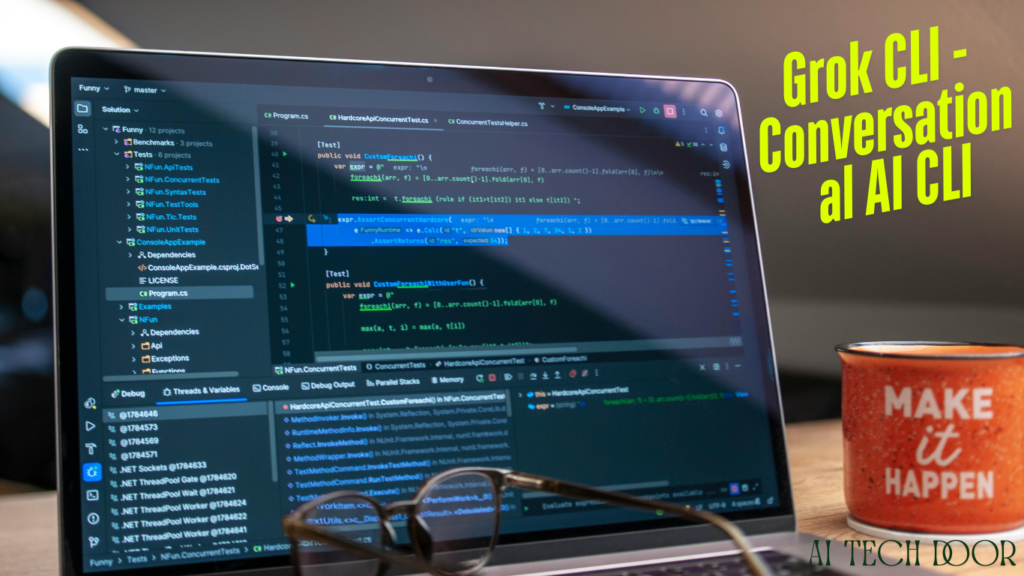
Grok Build is a command-line interface (CLI) coding agent developed by xAI. It reads your entire codebase, creates a multi-step execution plan for review, and then completes the task across multiple files and directories — all while running on your local machine.
xAI describes Grok Build as “a powerful new coding agent and CLI for professional software engineering and complex coding work.” It’s designed to automate the repetitive, time-consuming work of refactoring code, fixing bugs, and implementing features across large projects — tasks that typically require multiple manual reviews and corrections.
The underlying model runs on xAI’s infrastructure and scores 70.8% on SWE-Bench Verified, the industry-standard benchmark for real-world software engineering tasks.
Availability and Pricing
In May 2026, the Grok Build is in early beta and available exclusively to subscribers — its premium tier starts at $300 per month. The Grok Build is a professional-grade tool for teams and enterprises willing to pay for advanced capabilities like parallel subagents and local-first code processing. Individual developers and freelancers will likely find the entry cost prohibitive until the product becomes more widely available.
How It Is Different than Claude Code and Codex?
Market Position of Claude Code
For over a year, Anthropic’s Claude Code has been in the market and derive significiant revenue for the company. The tool has established deep adoption among professional developers and enterprises, making it the market leader in AI-assisted coding agents.
Codex CLI’s Reach
OpenAI’s Codex CLI maintains strong developer traction and is embedded in many professional workflows. It represents the established baseline for what developers expect from AI coding assistants.
Challenge for Grok Build
When Grok Build launched in the market, where competitors already had useful products. The Grok Build starts from zero in the high competitive market position. However, xAI does not simply copy existing features. But it introduces architectural innovations such as parallel subagents and local-first privacy that represent a different approach to the problem.
The 5 Features That Make Grok Build Different
1. Parallel Subagents
Traditional AI coding agents only execute one task sequentially — one task completes, then the next begins. But Grok Build works differently; it runs multiple independent agents on separate branches of your codebase. Each agent operates in isolation, preventing code conflicts while enabling true parallel execution.
This capability becomes valuable on large, complex projects. For example, you need to refactor an authentication module, update the API layer, and fix a frontend bug within the same codebase. Grok Build assign each task to a separate agent and executes them in parallel. Claude Code and Codex process tasks require running them one at a time.
Real-world impact: On a large project, parallel execution reduces overall completion time significantly compared to sequential agent-based tools.
2. Plan Mode
Before Grok Build modifies any file in the codebase, it generates a detailed plan for your review. You can approve the plan as generated, request revisions, or reject it entirely. Grok Build work further on the project if you approve it.
3. Arena Mode (Coming Soon)
Arena Mode will run multiple independent agents on one coding command, which allows each agent to give a different solution. Then, the system compares the outputs, ranks them based on code quality and efficiency metrics. This approach works when problems are complex. Developers can find different solutions and then compare each one. They choose the one solution that fits best for their codebase, whether it means better architecture, fast performance, or code.
For instance, a team is refactoring legacy code or rolling out a new architectural pattern. Arena Mode supports multiple valid approaches at once. No one has to write out each alternative first manually.
4. Local-First Privacy
Grok Build implements a local-first architecture, which means that your source code is processed on your local machine and is never transmitted to xAI’s servers. The model runs within your environment, eliminating the need for cloud-based code transmission.
This architectural choice has significant implications for teams handling sensitive intellectual property, unreleased products, or operating within regulated industries (healthcare, finance, legal, fintech). In these contexts, transmitting proprietary code to external servers is even with encryption and contractual guarantees. It introduces compliance risk and organisational friction.
Claude Code and Codex CLI both operate through cloud infrastructure. They require code to be sent to Anthropic and OpenAI servers, respectively. Grok Build’s local-first approach represents a fundamentally different trade-off: faster inference may require more local compute resources, but it ensures complete code privacy remains on your machine.
5. Pricing Structure — Three Different Tiers
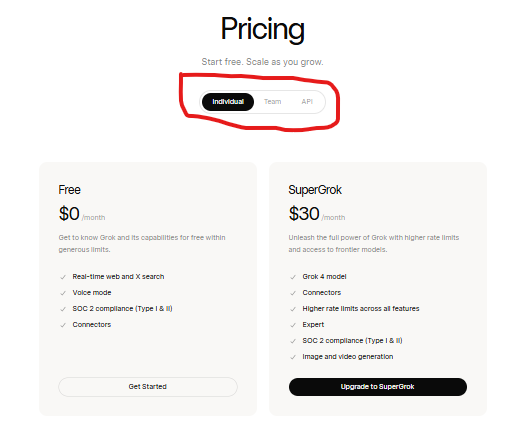
Monthly Subscription (Professional Tier)
Grok Build offers a monthly premium of $300. Grok Build’s beta pricing is positioned as a premium tool. For comparison, other professional-grade AI coding agents cost $100–$200 per month, and OpenAI offers low-cost entry points for individual developers. For solo developers and freelancers, the $300/month entry cost remains a significant barrier.
API Pricing (Developer Integration)
The Grok model is available via API at $0.20 per million input tokens, which is competitive within the current market. The API pricing structure may offer a more favourable model than the monthly subscription, though this depends on token consumption.
Why xAI Release Grok Build Now
Developer Usage and Market Timing
AI coding agents have come a long way. Most developers use get thoughts using AI and convert them into a useful product. You work with any dev team today, and I’m sure they are using some form of AI-assisted coding tool.
Coding agents have particularly earned their spot at the top. Why? Because Coding Agents actually save people’s time. That’s not a small thing in an industry where deadlines never seem to move.
Anthropic’s Claude Code and Google’s Gemini both have marked significant enterprise adoption. xAI’s Grok has faced competitive pressure in the developer market.
Competitive Position
The release of Grok Build, it reflects xAI’s strategic focus on the professional software engineering segment. This is a high-stakes market where developer trust directly translates to subscription revenue. xAI’s entry into this space is supported by technical differentiation (parallel subagents, local-first privacy) that competitors don’t yet offer.
Product-Market Fit Risk
The Grok Build launched in the market as a beta product. Popular competitors already have large user bases and strong footholds in companies. If Grok Build wants to succeed, it needs to genuinely justify the price tag. xAI also needs to earn the trust of developers who are already comfortable with other tools. How the company listens to feedback during the beta phase, and how fast it gives a response to it. Will likely decide whether Grok Build makes it in the long run?
FAQs
What is Grok Build?
Grok Build is an agentic command-line coding tool released by xAI in May 2026. It reads your codebase, builds a multi-step plan, and executes coding tasks across files and directories — including running shell commands and installing dependencies. It’s designed for professional software engineers working on complex projects.
How Grok Build is different from Claude Code?
The difference between Grok Build and Claude Code is the parallel subagent system. Grok Build can run multiple AI agents on separate branches of your codebase at the same time. While Claude Code can work sequentially. Grok Build is also local-first, which means your code does not leave your machine. Claude Code processes through Anthropic’s cloud infrastructure.
Who can use Grok Build?
The Grok Build is only available to SuperGrok Heavy subscribers. It costs $300 per month. The next plan for xAI is to expand it based on feedback.
Final Thoughts
The AI coding agent market represents one of the most competitive segments in professional software development. Anthropic’s Claude Code and OpenAI’s Codex CLI have established significant user bases and proved the market’s demand for these tools. xAI’s launched with Grok Build introduces a different architectural approach centred on three technical differentiators: parallel subagent execution, local-first code processing, and explicit plan review before execution.
These architectural choices address real concerns of developers. Whether Grok Build achieves market adoption depends on two factors: (1) whether the parallel subagent advantage translates to measurable productivity in real-world use. (2) Whether xAI can revise the product toward feature completeness and stability.